
How It Works — Gutter Cleaning
The full breakdown — what we do, what's included, how often you should schedule, and why it matters.

Every gutter section cleaned by hand
We remove debris from every accessible gutter run by hand — leaves, seedlings, shingle granules, whatever's accumulated. Remaining fine material gets cleared with electric blowers.
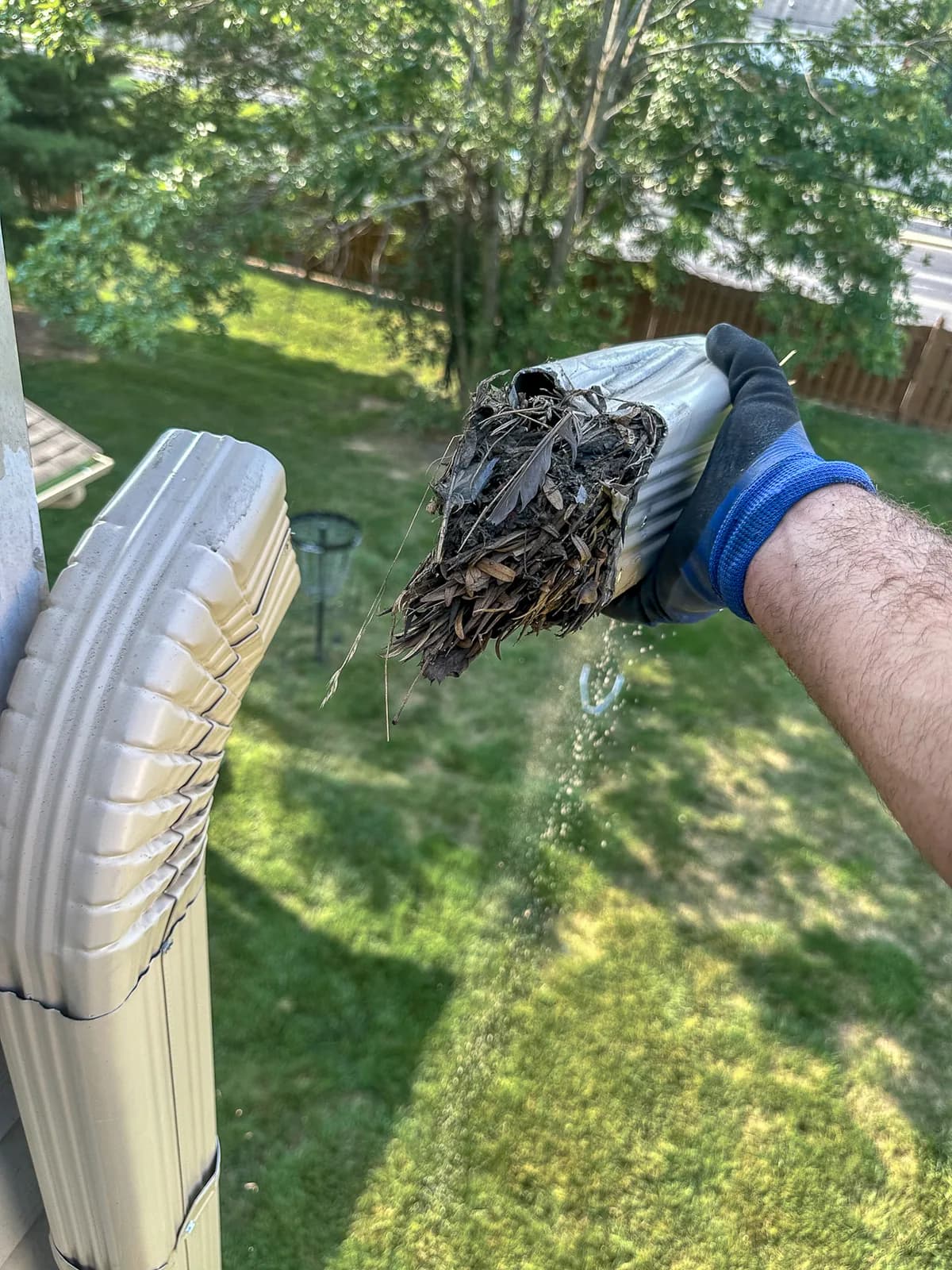
Every downspout verified flowing
We verify every downspout is flowing freely by dropping a marble through and confirming it exits at the bottom. If one is blocked, we disassemble it on-site to clear the obstruction — no extra charge.
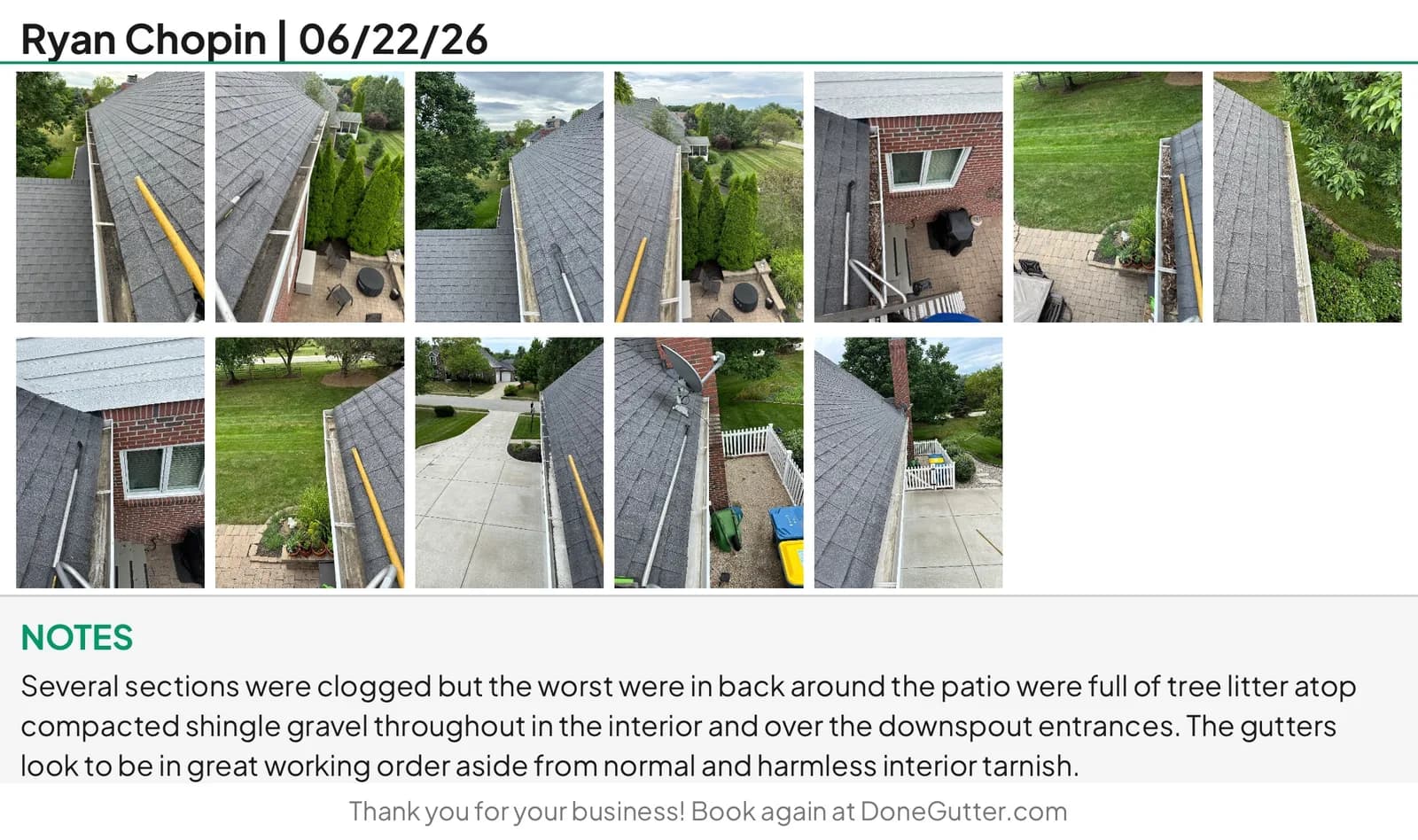
Photo proof with every job
Your invoice arrives by email with verification photos of clean, debris-free gutters and flowing downspouts. Plus a plain-English description of the work, what we found, and any recommendations.
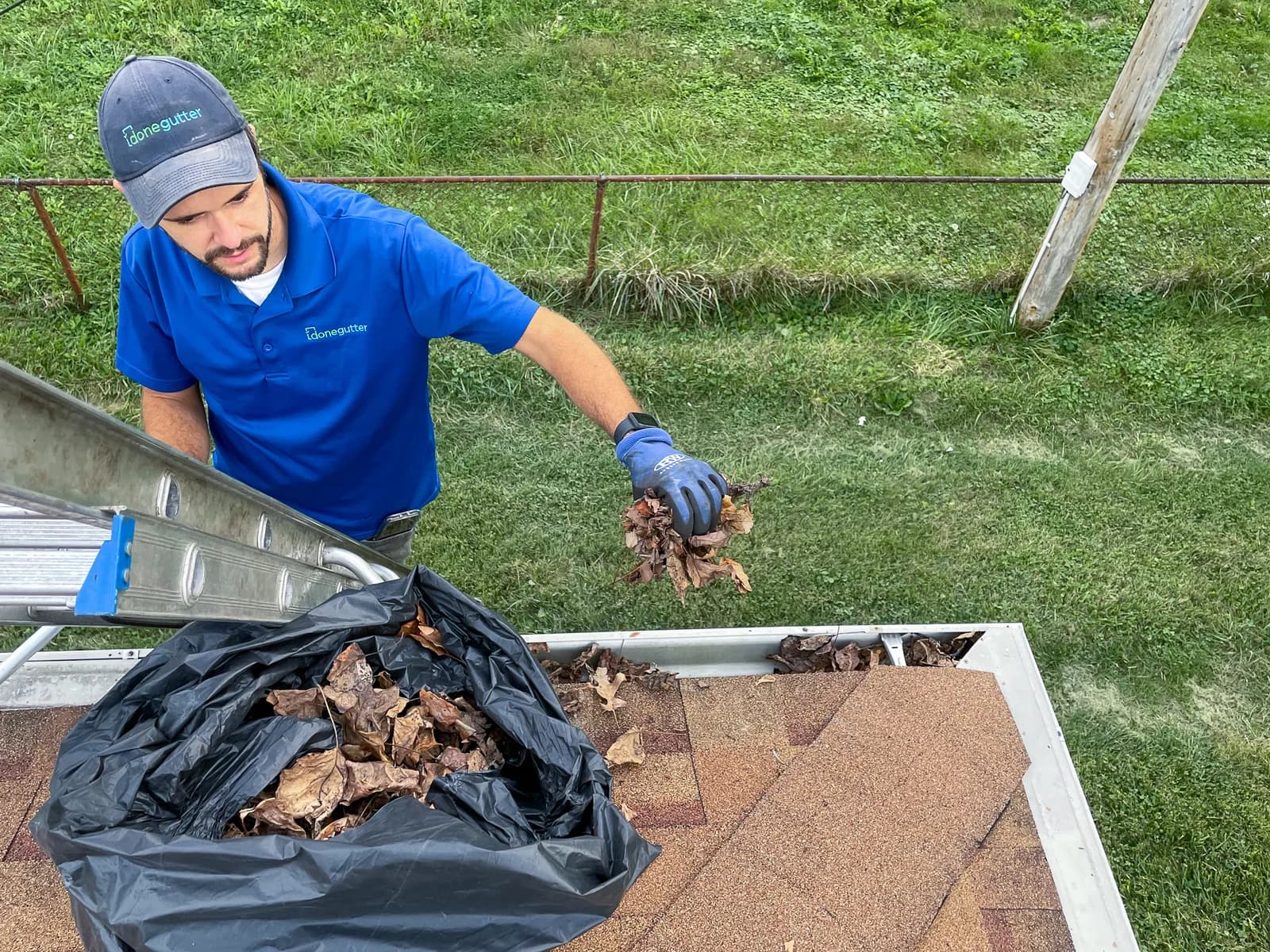
We clean up after ourselves
All debris goes in bags and leaves with us. Your landscaping, driveway, and walkways are left the way we found them — or better. This is one of the most mentioned things in our reviews.
Ready to get your gutters cleaned?
Exact pricing, no visit needed. Most quotes go out same day.
Get Your QuoteThe Biggest Enemy? Shingle Gravel.
Over 90% of homes in our area have asphalt shingle roofs. Those shingles shed coarse granules every single day — it's a normal part of how they age. Rain washes those granules off the roof, into your gutters, down your downspouts, and into whatever your downspouts connect to.
Unlike leaves, which are bulky and obvious, shingle grit is heavy, fine, and compacts into a dense layer at the bottom of your gutters. It doesn't blow away. It doesn't decompose. It just builds.
This is why no trees doesn't mean no problem. Homes without trees often end up with the worst compacted buildup because the homeowner assumes they don't need cleaning and skips it for years. By the time they check, the gutters are packed with a dense layer of grit that's harder to remove than leaves ever were.
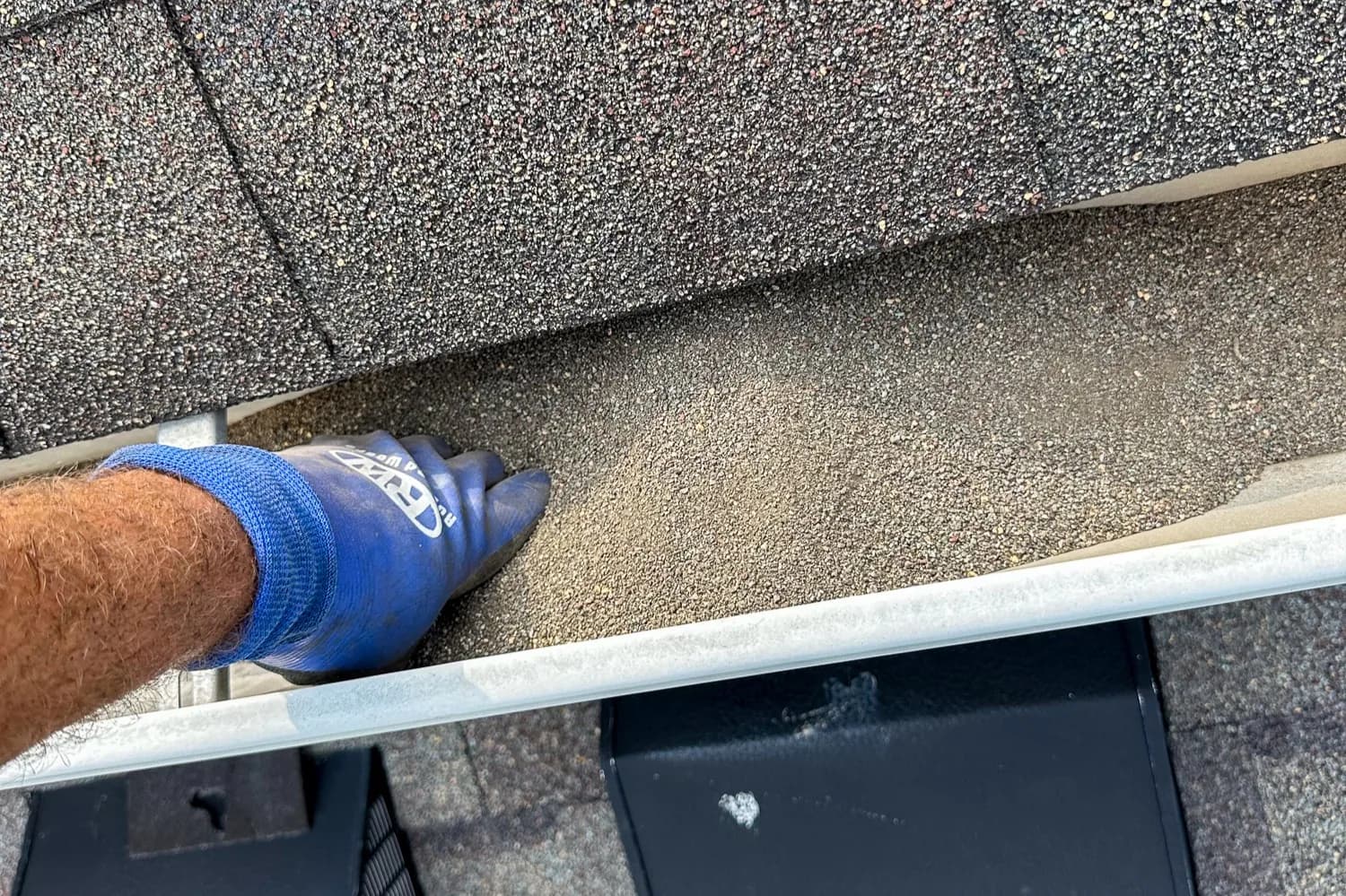

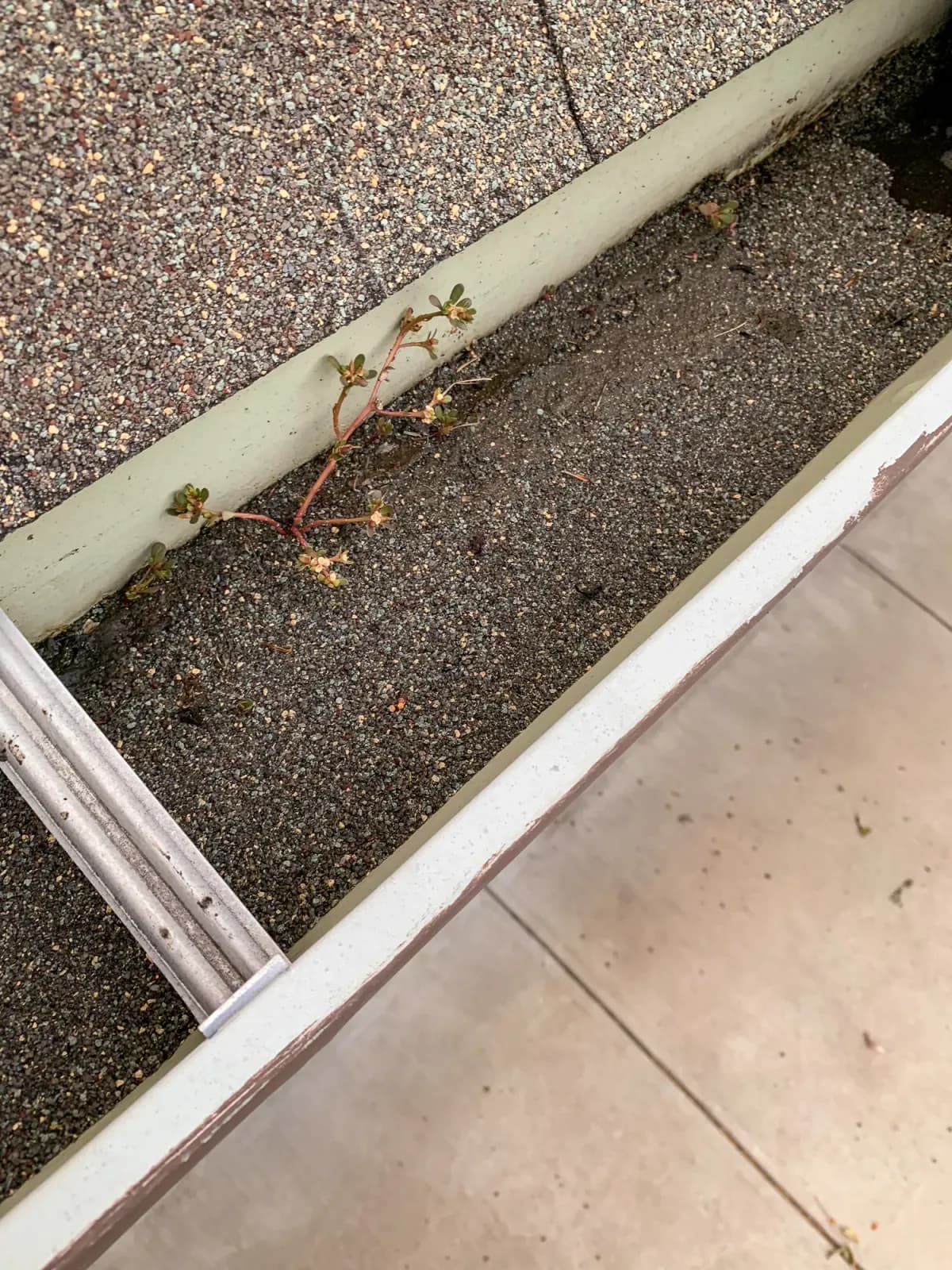
The same gravel that builds up in your gutters also washes into the buried pipes below. Those underground extensions are where the most damaging accumulation happens — and where most homeowners never think to look.
Gutters: Boring but Worth Knowing
Nobody thinks about their gutters until something goes wrong. Here are a few things worth knowing before that happens.
It really is important
The average roof in the Fishers area catches roughly 80,000 gallons of rainwater per year. All of it funnels through your gutters and downspouts. When those are clogged, that water has to go somewhere — and it ends up pooling against your foundation, seeping into basements, rotting fascia boards, and eroding landscaping.
The damage from a single season of neglect can cost far more than years of regular cleaning. Read: Why do gutters need to be cleaned?

They clog quicker than you think
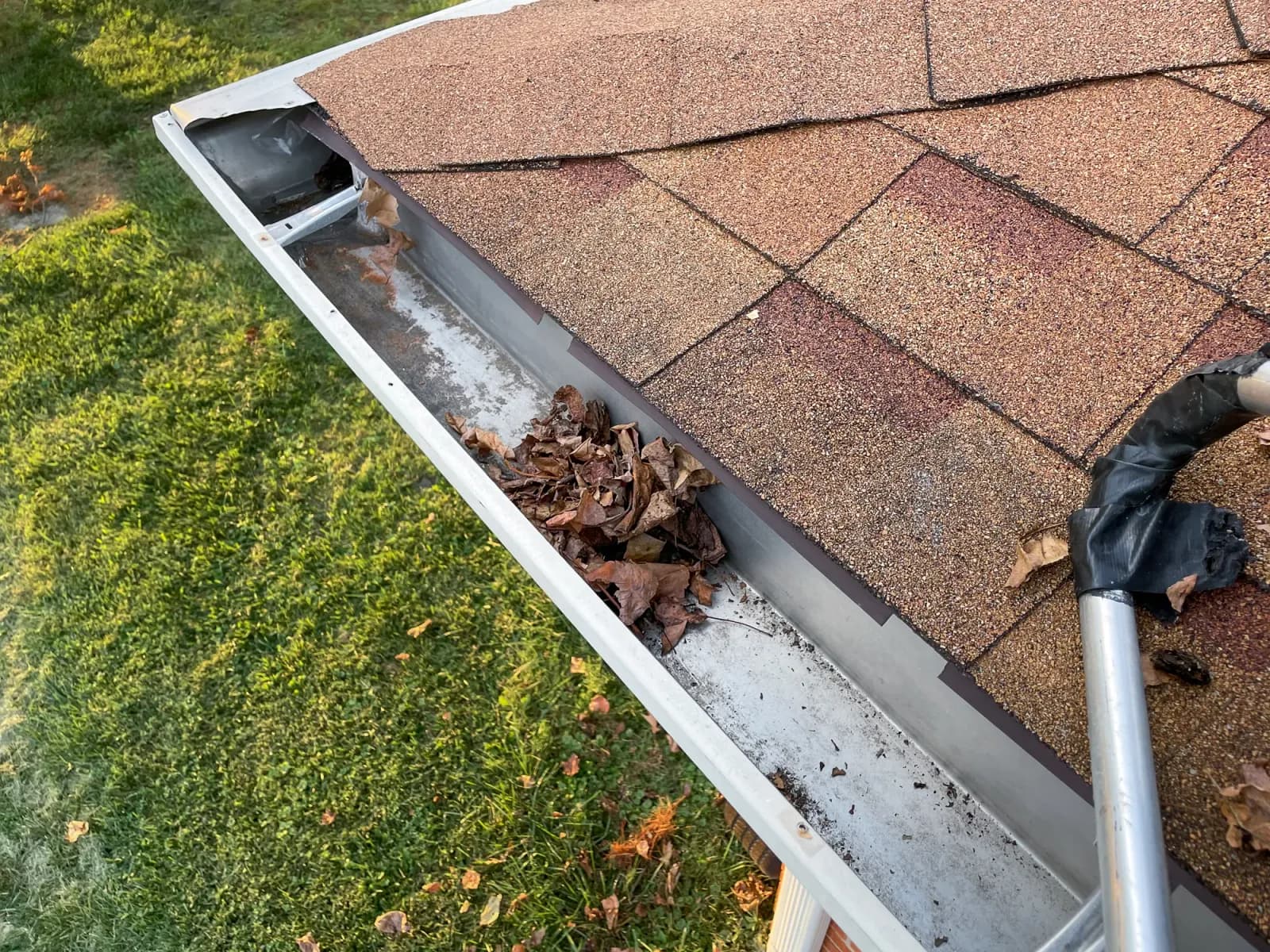
Gutters don't need to be fully packed to stop working. A small plug of debris right at the downspout opening is enough to back up an entire run. From the ground, everything might look fine — but the water has nowhere to go.
We also find some unexpected things up there — tennis balls, bird nests, kids' toys, you name it. It doesn't take much to turn a functioning gutter into a trough of standing water.
Gutter guards don't really work
We don't sell gutter guards because we haven't found any that reliably work long-term. The cheap ones fail quickly. The expensive ones — the kind that cost $2,000–$5,000+ installed — might keep large leaves out, but shingle grit, seeds, and fine debris still get through and accumulate underneath.
That means you still need periodic cleaning, but now it's harder because the guards have to be removed and reinstalled. In many cases, the cost of high-end guards exceeds what you'd spend on professional gutter cleaning for a decade or more. There's no one-and-done solution — regular maintenance is just part of owning a home.
Read: Are gutter guards worth it?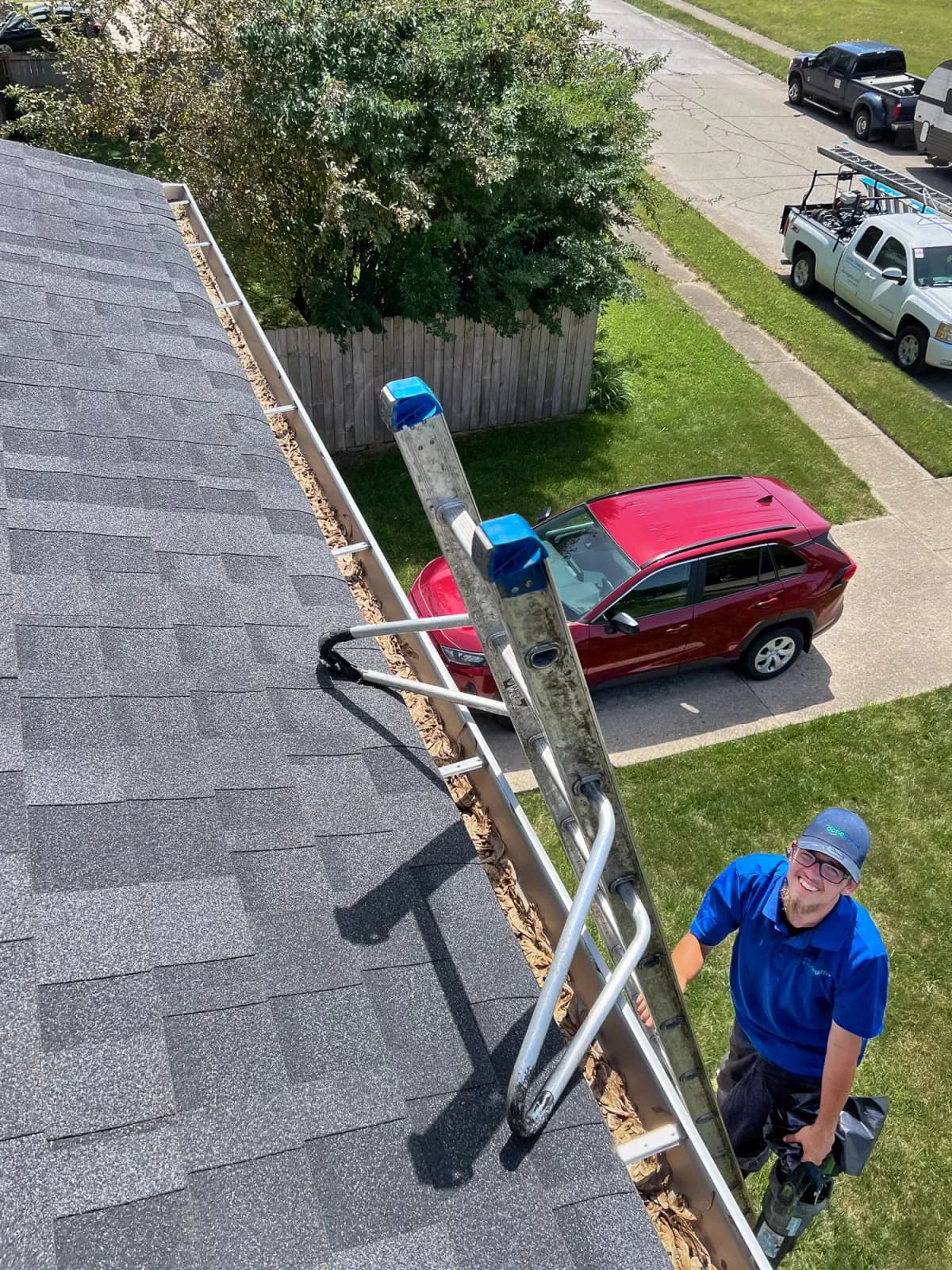
How Often Should You Clean Your Gutters?
Getting your gutters cleaned even just once a year can save you a lot of headaches, and for most houses that's sufficient. Some homes can get away with every couple of years, but there are many — especially those in deep woods — that need it a lot more frequently. All homes do need occasional gutter maintenance though.
Annual cleaning — most homes
Most homes, say newer homes with minimal mature tree coverage, can get away with one cleaning at any point in the year. This will clear shingle gravel buildup, bird nests, and any plugged downspouts.
Twice or more a year
Homes with heavy tree coverage — frequent in areas like Geist, where homes sit underneath mature canopy — should aim for at least two cleanings per year. These properties catch debris all year, not just in the fall.
After a roof replacement — regardless of schedule
A re-roofing job dumps significant construction debris into your gutters and downspouts. Schedule a cleaning within a few months of the work, even if you had one recently.
Where does the water go after the downspout?
Most homes have buried pipes that carry water from the base of each downspout to exit points in the yard — away from the foundation. Over time, these underground lines fill with the same shingle grit and organic debris that accumulates in your gutters.
When we clean your gutters, we verify every downspout flows to ground level. But what happens below that point is a different system — and one that most homeowners don't know exists until water starts pooling where it shouldn't.
Learn about buried downspout cleaning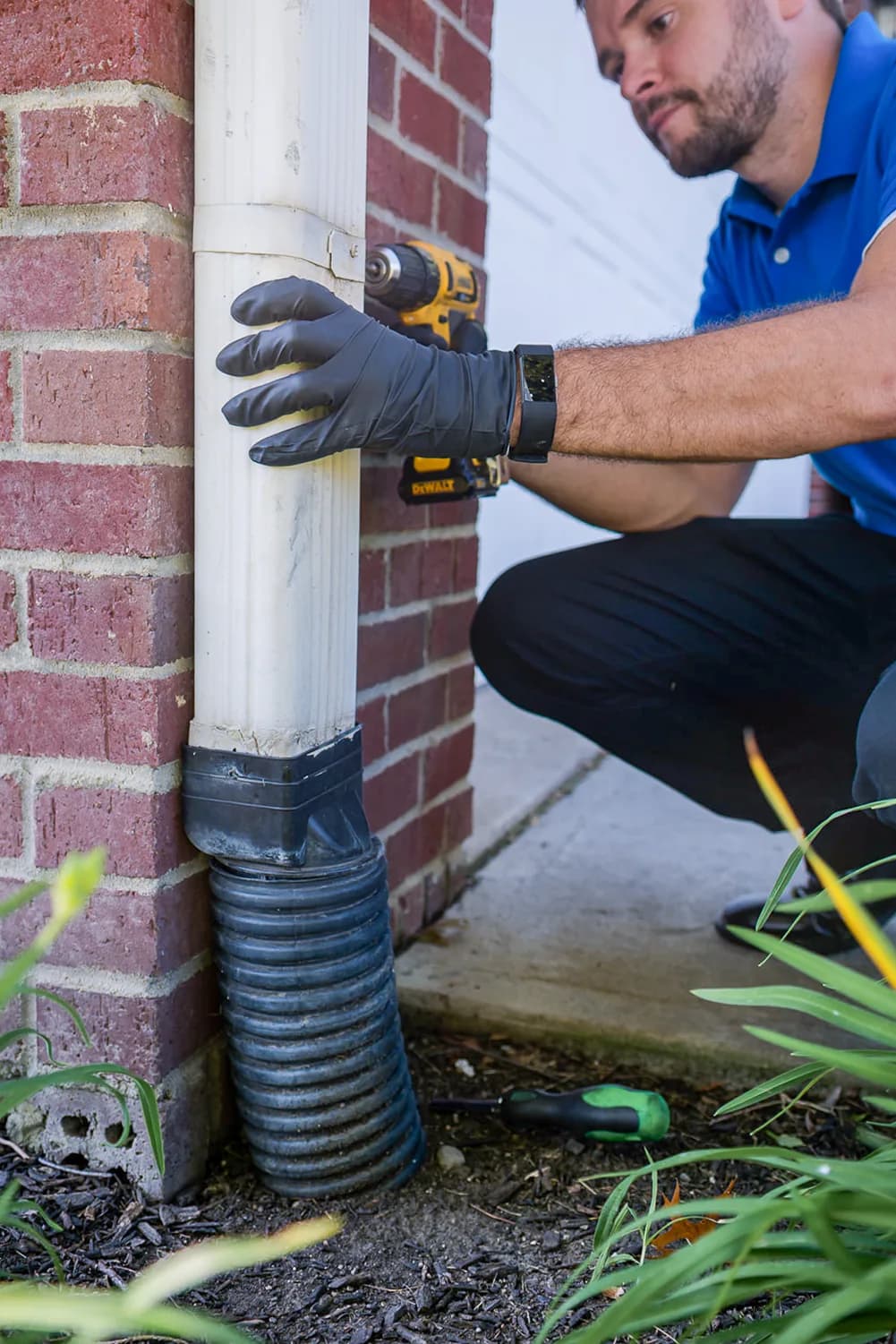
Ready for your exact price?
Exact pricing, no visit needed. Most quotes go out same day.
Get Your Quote